United Cerebral Palsy (UCP) of Central Arizona has made a monumental investment in pediatric physical therapy by becoming the first clinic in the world to offer the “Baby G” Early Mobilization System for infants and toddlers.
Developed by Aretech, LLC, a leader in robotic rehabilitation technology, in collaboration with the National Institute of Health and the University of Southern California, the groundbreaking Baby G system is designed specifically to help young children with motor impairment learn to sit, crawl, stand and eventually walk. Baby G uses a robotic body-weight support system in an overhead 3D play space so babies, as young as six months, can practice balance tasks, repetition and gain motor skill experiences in a safe environment.
“Early diagnosis and intervention are critical when it comes to giving a child with cerebral palsy or motor disorders an opportunity to meet age-appropriate developmental milestones,” said Brittany Landabazo, pediatric physical therapist at UCP of Central Arizona. “Studies show starting therapy within the first year of life after a diagnosis can dramatically improve long-term outcomes in motor skills, independence and quality of life.”
Technology That Changes Lives
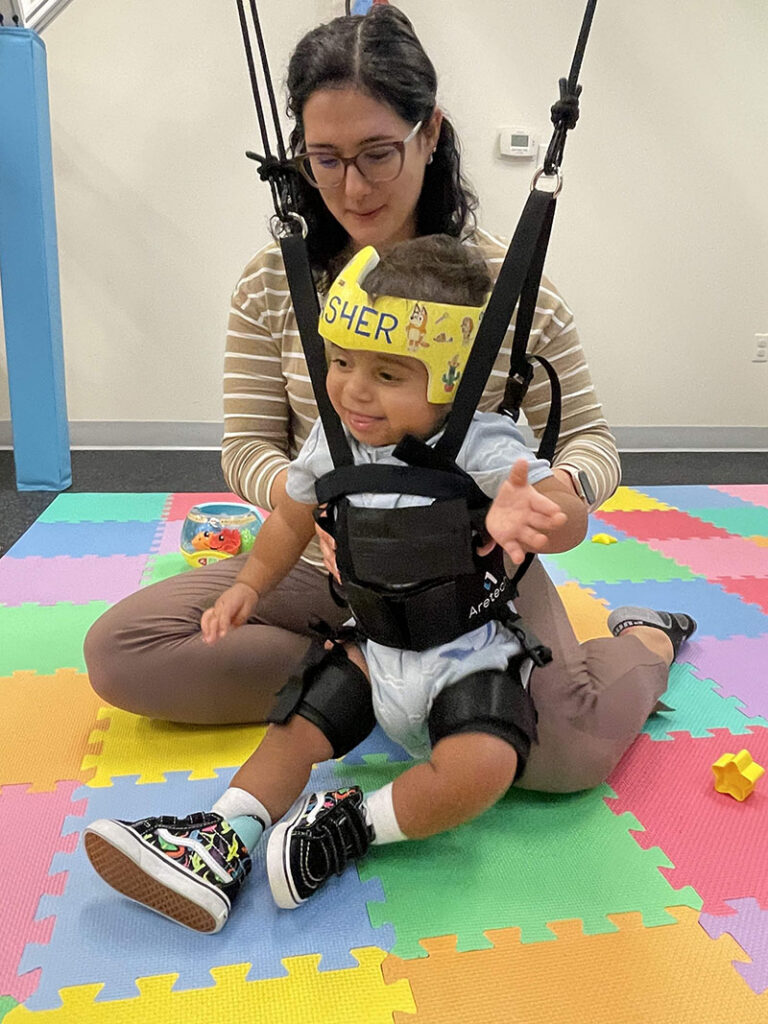
Baby G technology allows therapists to provide early mobility training for young children who have cerebral palsy and other neuromotor disorders by helping babies learn motor patterns through self-directed movement using trial and error. It can be used with children as small as 12 pounds, making it ideal for infants and toddlers. The system can also accommodate up to 50 pounds for older children.
“The Baby G is more than just a piece of equipment; it’s a doorway to independence for our youngest patients,” said Landabazo. “With this technology, we can take advantage of young children’s motivation to explore. By offloading some of a child’s own weight, we help children experience movement by reducing fatigue and building strength and ultimately confidence to connect with their world at a stage when neuroplasticity, or the brain’s ability to reorganize its neural network, is at its peak.”
According to the Centers for Disease Control, cerebral palsy is the most common motor disability in childhood, affecting 1 in 345 children in the U.S. Many of these children face significant challenges with movement and coordination that require intensive, ongoing therapy that should begin in early infancy.
“The Baby G is a transformative addition to our Downtown East Campus, which will enable children as young as six months to engage in guided, repetitive, and therapeutic movement that previously wasn’t possible at this level,” Landabazo added. “This innovative tool supports UCP of Central Arizona’s mission to deliver advanced therapeutic solutions to the children and families we serve each day.”
UCP of Central Arizona: A Leader in Early Intervention
As the only clinic in the world to offer the Baby G in a therapeutic setting, UCP of Central Arizona continues to lead the way in combining clinical expertise, a world-class standard of excellence, and cutting-edge technology to serve children with special needs. The integration of Baby G reinforces the organization’s mission to provide comprehensive services for individuals with disabilities to live a life without limits.
The Baby G purchase was made possible thanks to a generous investment of nearly $400,000 from Thunderbirds Charities and the Arizona Board of Visitors.
For more information about the Baby G or to schedule an appointment, visit UCPofCentralAZ.org.